


Rainy Season & Snow Driving Checklist for Your Lexus
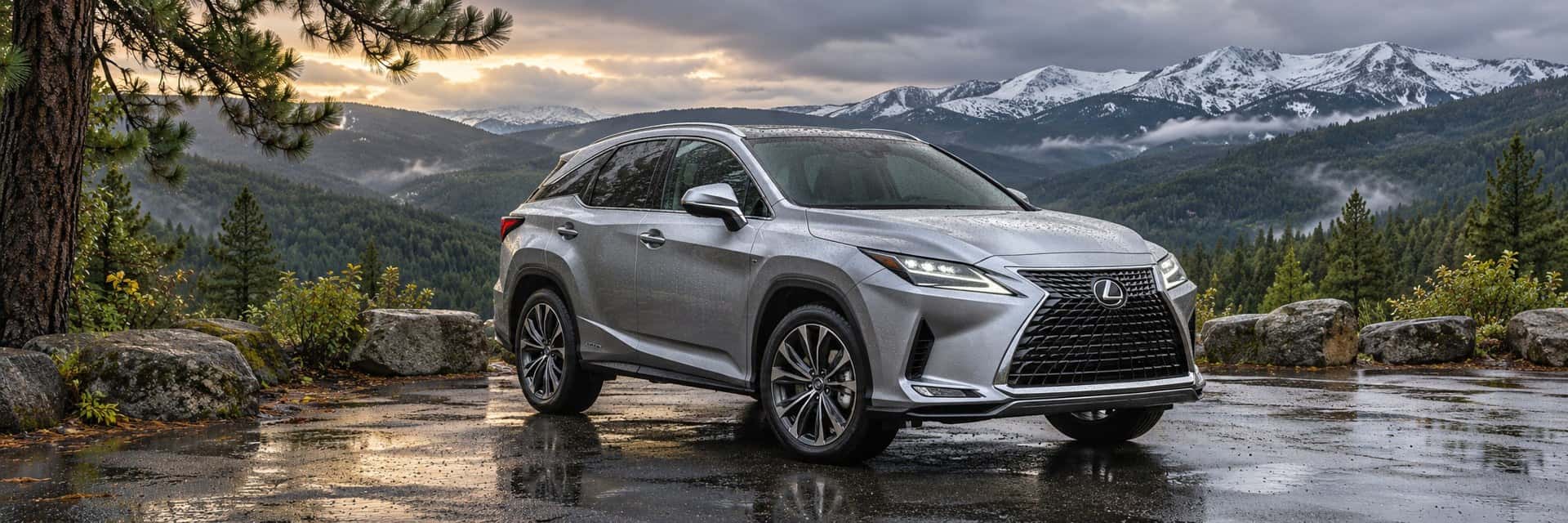
LEXUS OF CONCORD • SEASONAL SERVICE GUIDE
Bay Area rain and Sierra snow can put your tires, brakes and visibility to the test. Whether you commute through Concord, Walnut Creek and Pleasant Hill or plan a winter trip to Lake Tahoe, a few checks before departure can help you identify worn components and prepare for changing conditions.
Start with the rainy season checklist below, then review the mountain-travel section before heading into snow. We cover brakes, tire tread depth, cold tire pressure, windshield wipers, lights and battery condition—with an important reminder: some Lexus wheel and tire configurations prohibit tire chains.
Schedule a Seasonal Inspection View Current Service Specials
Your Rainy Season Checklist at a Glance
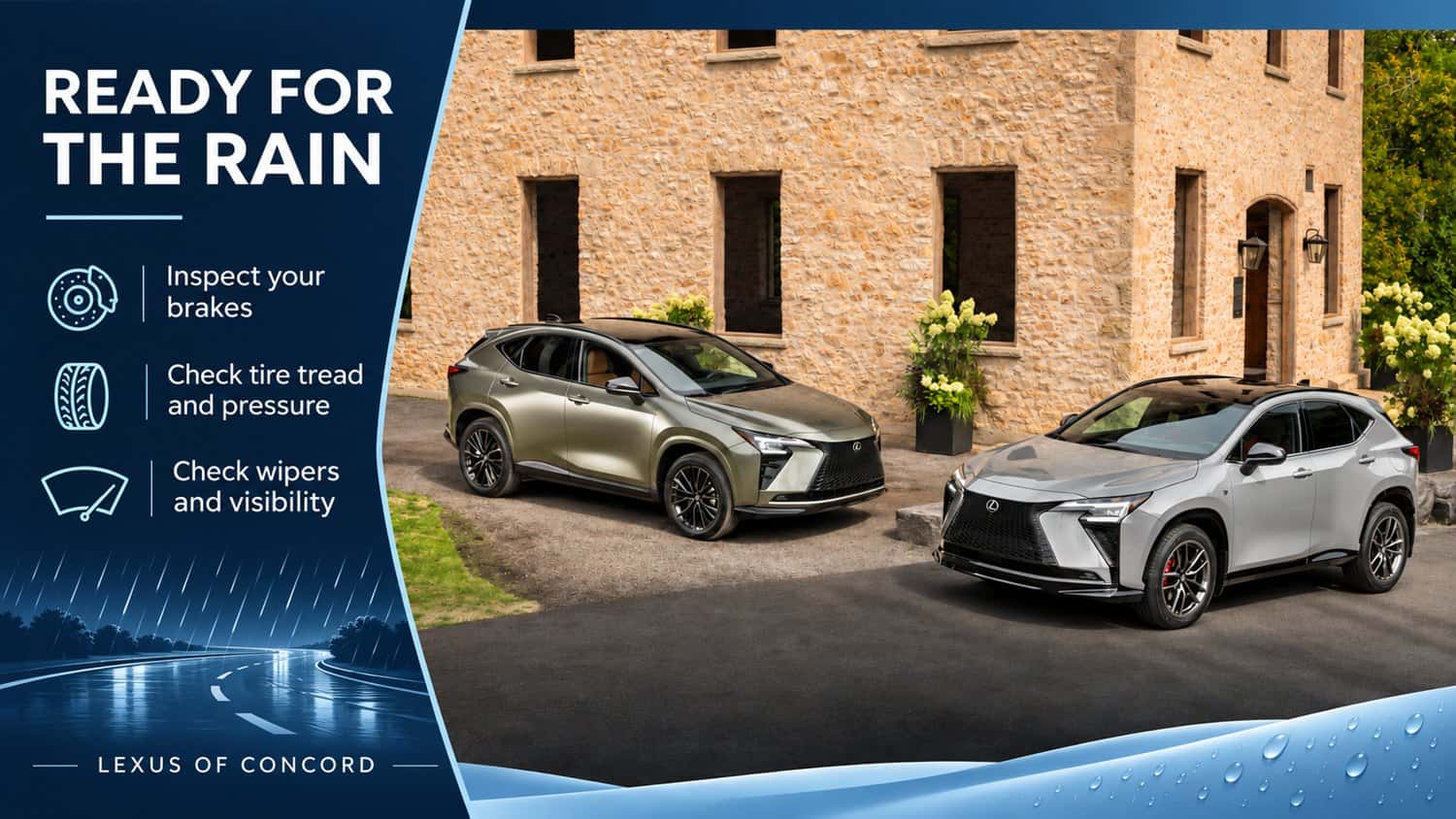
- Inspect brakes and address unusual noises, vibration or changes in pedal feel.
- Measure tire tread and check for uneven wear or damage.
- Set cold tire pressure to the vehicle placard specification.
- Replace wipers that streak, skip or leave areas uncleared.
- Check washer operation, headlights, brake lights and defrosters.
- Have the 12-volt battery and relevant fluids checked.
- Before a snow trip, verify tire suitability, traction-device restrictions and road conditions.
1. Check Your Brakes Before Wet Weather
Rain reduces available tire grip, making smooth braking and extra following distance especially important. A brake inspection can identify worn components before a busy commute or mountain drive.
Have your brakes checked if you notice squealing, grinding, vibration, pulling during braking, a warning light or a change in pedal feel. Ask for an inspection of pad thickness, rotors and the hydraulic system, including fluid condition and visible leaks. New brake pads cannot compensate for worn tires or excessive speed on a wet road.
If braking ability changes suddenly, stop in a safe place and arrange assistance rather than continuing your trip.
Explore Lexus Brake Service • Check Current Brake Service Offers
2. How Much Tire Tread Do You Need for Rain and Snow?
Tread helps channel water away from the tire’s contact patch. Use a tread-depth gauge at several locations across and around each tire, and have uneven wear evaluated. A single reading does not describe the condition of the whole tire.
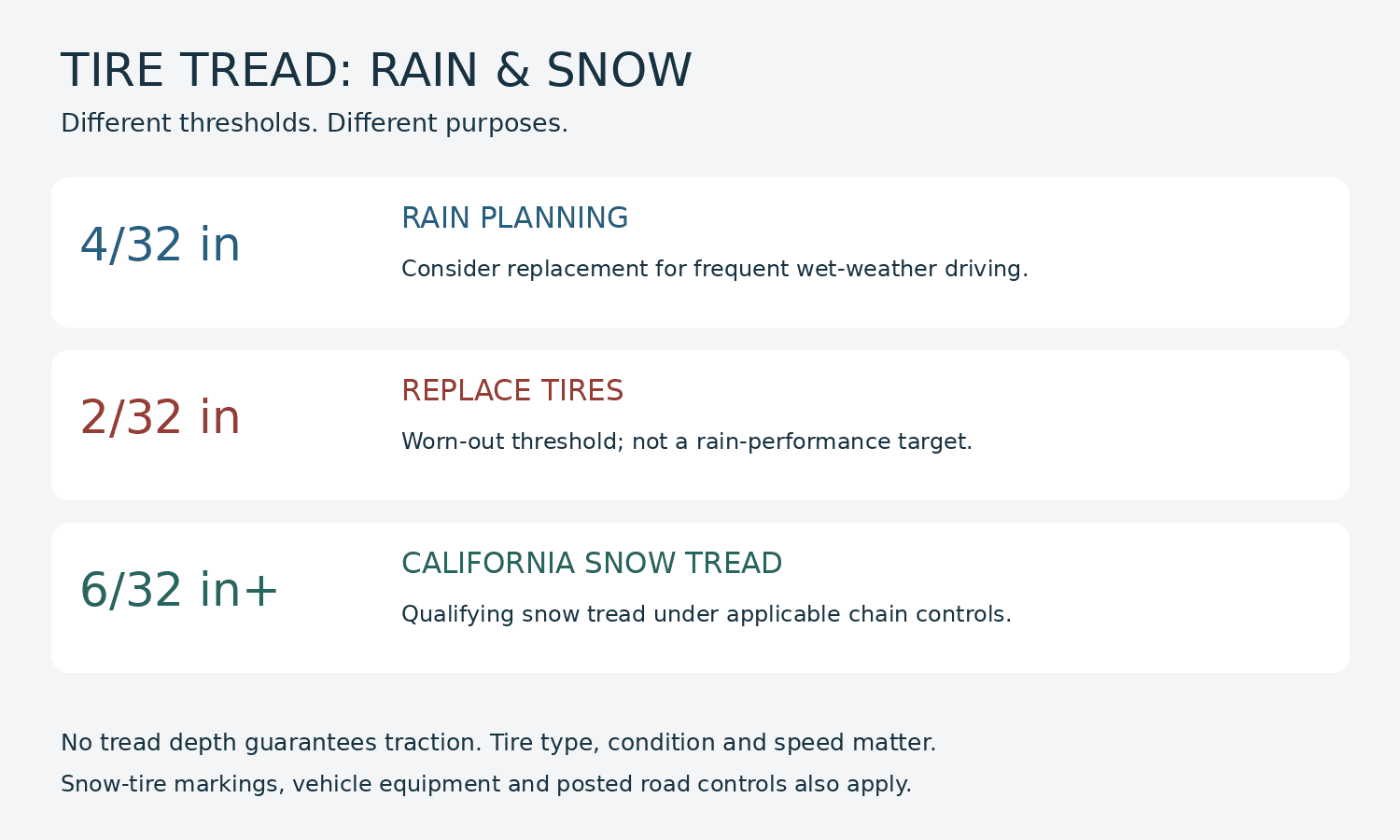
| Tread depth | What it means |
|---|---|
| 4/32 inch (about 3.2 mm) | Consider replacement when frequent rain or heavy wet-weather driving is expected. This planning threshold provides more margin than waiting for wear bars. |
| 2/32 inch (about 1.6 mm) | Tires are worn out and should be replaced. Do not treat this as a wet-weather performance target. |
| 6/32 inch (about 4.8 mm) or more | California snow-tread depth requirement when relying on qualifying snow tires under chain controls. Required markings, vehicle configuration and the posted control level also apply. |
Michelin identifies 4/32 inch as a consideration for frequent wet-weather use; NHTSA identifies 2/32 inch as the replacement point. Caltrans specifies 6/32 inch for qualifying snow tread. These numbers serve different purposes. No tread depth guarantees traction in rain, snow or ice. Tire design, age, condition, speed and weather all matter.
Also check for sidewall bulges, cuts, cracking and embedded objects. For regular snow travel, discuss winter tires or suitable tires carrying the three-peak mountain snowflake marking with a tire professional. Do not assume every all-season tire offers the same winter performance.
Find Lexus Tire Service • Check Current Tire Offers
3. Check Tire Pressure When Tires Are Cold
Cooler weather can lower tire pressure. Check at least monthly and before a long trip, ideally after the vehicle has been parked for at least three hours. Use the recommended pressure on the driver-door placard or in the owner’s manual—not the maximum pressure printed on the tire sidewall.
Follow any different front and rear specifications. A tire-pressure warning system does not replace regular checks. If a warning returns after adjustment, have the tire inspected for a leak.
4. Inspect Wipers, Washer Fluid and Windshield Visibility
Run the washers and check whether the blades clear the windshield evenly. Replace blades that leave streaks, skip, chatter or have split rubber. Check the rear wiper if equipped, clean the windshield inside and out, and confirm the washer jets work.
Before heading into freezing temperatures, use washer fluid rated for the expected conditions and suitable for your vehicle. Clear ice before operating the wipers, and follow the owner’s manual if the blades require a service position before lifting them.
A compatible water-repellent windshield treatment may supplement visibility, but it does not replace working wipers or clean glass.
Explore Lexus Wiper Blades • Check Current Wiper and Visibility Offers
Offers change. Check the current specials page or contact our service team about available brake, vision, tire and battery promotions, eligibility and expiration dates.
5. Test Lights, Defrosters, Battery and Fluids
Check headlights, taillights, brake lights and turn signals. Test the front defroster and rear defogger before you need them. Remove snow from lights, windows and the roof before driving.
Ask for a 12-volt battery condition check, particularly if starting has become sluggish. Hybrid and electric Lexus vehicles also use a low-voltage electrical system; follow the model’s maintenance instructions. Have coolant protection and condition checked, along with other fluids required by your maintenance schedule. Never open a hot cooling system.
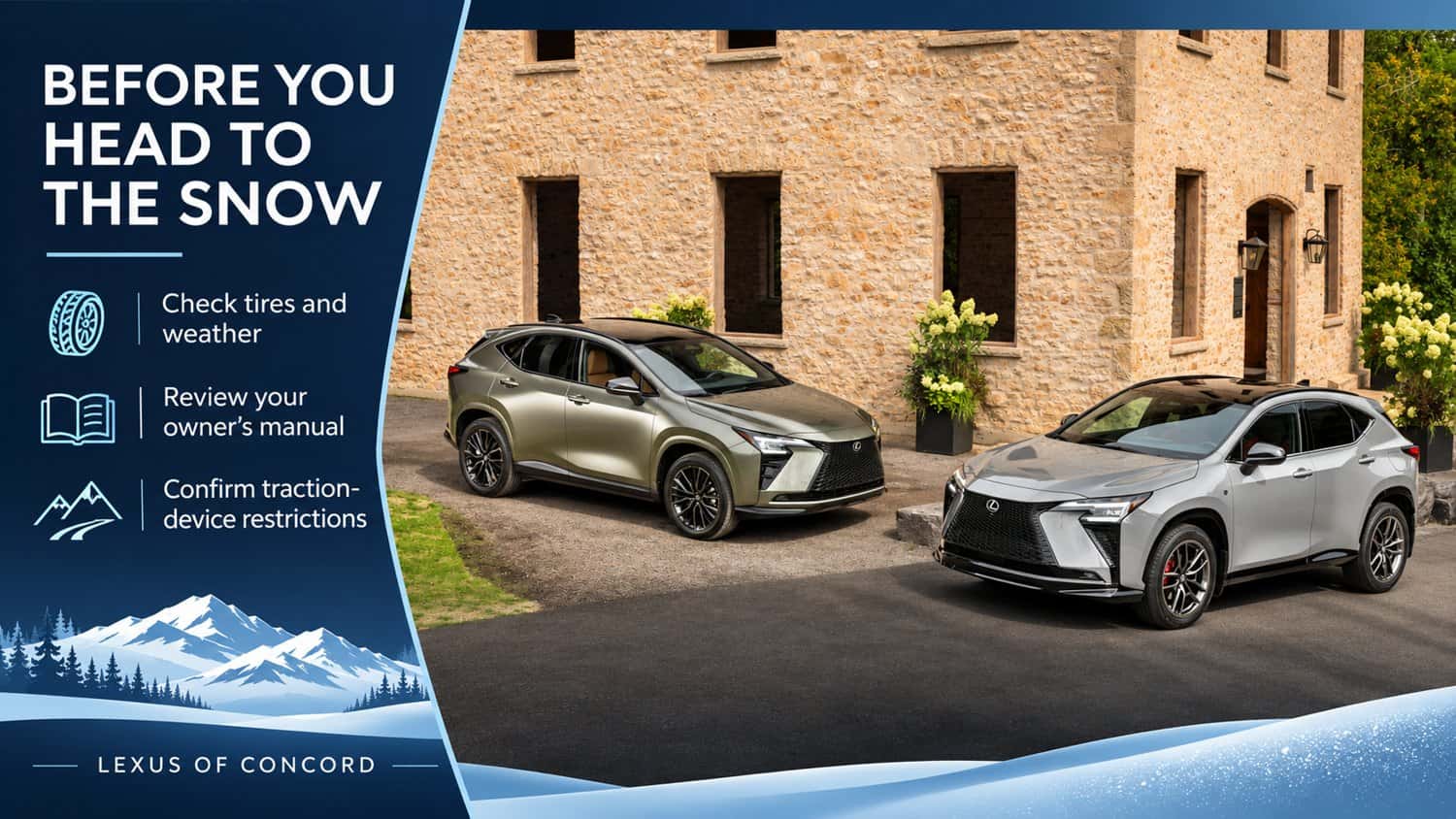
Can You Use Snow Chains on Your Lexus?
Check your exact model year, wheel size and tire size before buying or installing traction devices. Lexus instructions vary: some configurations permit specified chains on a specified axle, while others state that chains cannot be mounted and recommend snow tires instead.
Do not assume that a cable chain or textile snow sock is acceptable just because it fits the tire. Confirm both vehicle compatibility and acceptance under the applicable road restrictions. Never install a device contrary to your owner’s manual.
Find your vehicle’s instructions through Lexus Owner Manuals and Resources. Our service team can help review your tire setup and the relevant restrictions before departure.
California Chain Controls: AWD Is Not a Blanket Exemption
AWD can help a vehicle get moving, but it does not remove the need for suitable tires, cautious speed or compliance with chain controls. Under R2, the exemption applies to qualifying four-wheel/all-wheel-drive vehicles with snow-tread tires on all four wheels; those vehicles still must carry traction devices. Under R3, traction devices are required on all vehicles without exception.
A manufacturer’s chain restriction does not exempt a vehicle from road controls. If required devices cannot be used safely on your Lexus, postpone travel or select an open alternative route. Follow posted signs and Caltrans or CHP instructions.
Check Caltrans QuickMap and Caltrans Chain Controls before leaving and again when safely stopped if conditions change.
Before Leaving Concord for Tahoe or the Sierra
- Check the forecast, closures and chain controls along the entire route.
- Confirm tires and any permitted traction devices are appropriate for your exact vehicle.
- Pack warm layers, blankets, water, snacks, a flashlight, gloves and a charged phone with backup power.
- Allow extra time and maintain an adequate fuel or charge reserve.
- Slow down and leave extra stopping distance. Avoid abrupt steering, acceleration and braking.
- Avoid flooded roads and postpone travel when conditions exceed your vehicle’s capabilities.

Schedule Your Rainy Season or Pre-Trip Inspection
Whether you drive locally in Concord, Pleasant Hill or Walnut Creek—or plan to head into the mountains—Lexus of Concord can help you review brakes, tires, wipers and seasonal maintenance needs. Tell your advisor where you plan to travel and ask about model-specific tire-chain restrictions.
Schedule Service View Service Specials Call Service: (925) 520-3180
Frequently Asked Questions
Should I wait until my tires reach 2/32 inch before replacing them?
No. That is the worn-out replacement point. For frequent rain, consider replacement around 4/32 inch and have tire condition evaluated. California’s qualifying snow-tread requirement is a separate 6/32-inch threshold.
Does every Lexus allow snow chains?
No. Restrictions depend on the model year and wheel/tire configuration. Consult your exact owner’s manual before selecting chains, cables or other traction devices.
Can winter tires replace chains whenever chains are required?
No. Any exemption depends on the posted control level and vehicle equipment. Under R3, all vehicles require traction devices.
What tire pressure should I use in winter?
Use your vehicle’s recommended cold pressure from the driver-door placard or owner’s manual. Do not use the tire sidewall maximum or intentionally lower pressure for ordinary winter road driving.
Can I book brakes, tires and wipers together?
Include those concerns when scheduling so the service team can plan the inspection and discuss work, pricing and any applicable offers with you.
Sources and Owner Resources
- NHTSA: Tire Safety and Pressure
- NHTSA: Winter Driving Tips
- Michelin: Tire Tread Depth
- Caltrans: Winter Driving Preparation
- Caltrans: Snow-Tread and Chain Requirements
- Lexus: Owner Manuals and Resources
Prepared November 2, 2026. General seasonal guidance; follow the owner’s manual for your exact vehicle and current road restrictions. An inspection does not guarantee traction or safe travel in every condition. Service recommendations depend on inspection findings; offers are subject to current terms.
0 comment(s) so far on Rainy Season & Snow Driving Checklist for Your Lexus